
Stewed Black-Eyed Peas with Swiss Chard
A one-pot stew of black-eyed peas with leeks, Swiss chard, and tomatoes topped with a bright parsley-garlic-lemon gremolata; the beans bring fiber that supports gut health and helps reduce inflammation.
From The Young Forever Cookbook
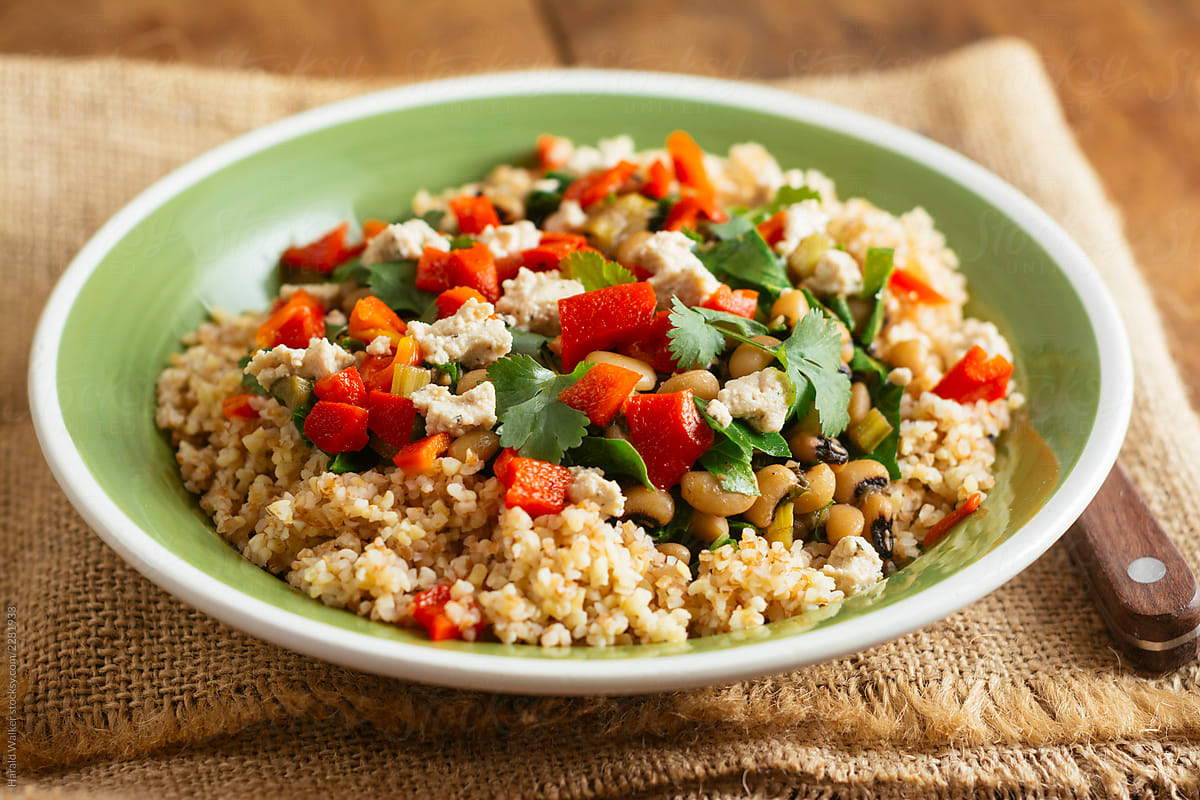
- Prep
- 15 min
- Cook
- 30 min
- Total
- 45 min
- Yield
- 4 servings
- Category
- Main Course
Nutrition (estimated)
per 1 bowl- Calories
- 260 kcal
- Protein
- 14 g
- Fat
- 6 g
- Carbs
- 38 g
- Fiber
- 11 g
- Sugar
- 5 g
- Sodium
- 760 mg
Ingredients
- 1 tbsp extra-virgin olive oil
- 1 large leek, halved and thinly sliced
- 1 celery stalk, halved and finely chopped
- 2 garlic cloves, minced
- 2-3 tsp finely chopped red chile
- 1 bunch Swiss chard, leaves chopped, stems finely chopped
- 1 cup strained tomatoes
- 2 (15.5-oz) cans black-eyed peas, drained and rinsed
- 2 cups vegetable stock
- 0.5 cup finely chopped fresh flat-leaf parsley
- 2 garlic cloves, minced
- 2 tsp grated lemon zest
- 2 tsp lemon juice
Instructions
- Heat olive oil in a large lidded pan over medium. Cook leek and celery about 4 min until soft. Add garlic and chile; cook 1 min. Stir in 1 cup finely chopped chard stems and cook 4 min until tender (save extra stems for another use). Add chard leaves, stir, and cook 2 min until beginning to wilt. Stir in strained tomatoes.
- Add black-eyed peas and stock; stir well. Bring to a boil, reduce to a simmer, cover, and cook 15 min. Remove lid and cook 5 min more until slightly thickened.
- Gremolata: Stir all ingredients together in a small bowl.
- Serve stewed peas in bowls with gremolata on top. Add a scoop of quinoa or brown rice if desired.
Active Compounds
Nutrients and bioactive compounds delivered by this recipe's ingredients.
From: Black-Eyed Peas
May Support
Health conditions and aging processes this recipe's compounds may influence, based on the source research.
Reduces risk of · via Dietary fiber
Protects against · via Dietary fiber
Reduces risk of · via Dietary fiber
Improves · via Dietary fiber
Reduces risk of · via Dietary fiber
Protects against · via Dietary fiber
Protects against · via Dietary fiber
Protects against · via Dietary fiber
Protects against · via Dietary fiber
Improves · via Dietary fiber
Reduces risk of · via Dietary fiber
Reduces risk of · via Dietary fiber
Protects against · via Dietary fiber
Protects against · via Dietary fiber
Reduces risk of · via Dietary fiber
Reduces risk of · via Dietary fiber
Protects against · via Dietary fiber
Reduces risk of · via Dietary fiber
Improves · via Dietary fiber
Reduces risk of · via Dietary fiber
Reduces risk of · via Dietary fiber
Reduces risk of · via Dietary fiber
Improves · via Dietary fiber
Reduces risk of · via Dietary fiber
Improves · via Dietary fiber
Reduces risk of · via Dietary fiber
Protects against · via Dietary fiber
Protects against · via Dietary fiber
Protects against · via Dietary fiber
Related Recipes
Other recipes that share compounds or health benefits with this one.
- Baked Carrot Cake OatmealThe How Not to Age Cookbook
- Baked Eggs with Chickpeas and TomatoesThe Young Forever Cookbook
- Banana-Walnut Cake with Blackberry-Almond Butter SauceThe How Not to Age Cookbook
- Barley Risotto with Artichokes and MushroomsThe How Not to Age Cookbook
- Beef Kofte with HummusThe Young Forever Cookbook
- Beef Short Rib RaguThe Young Forever Cookbook